
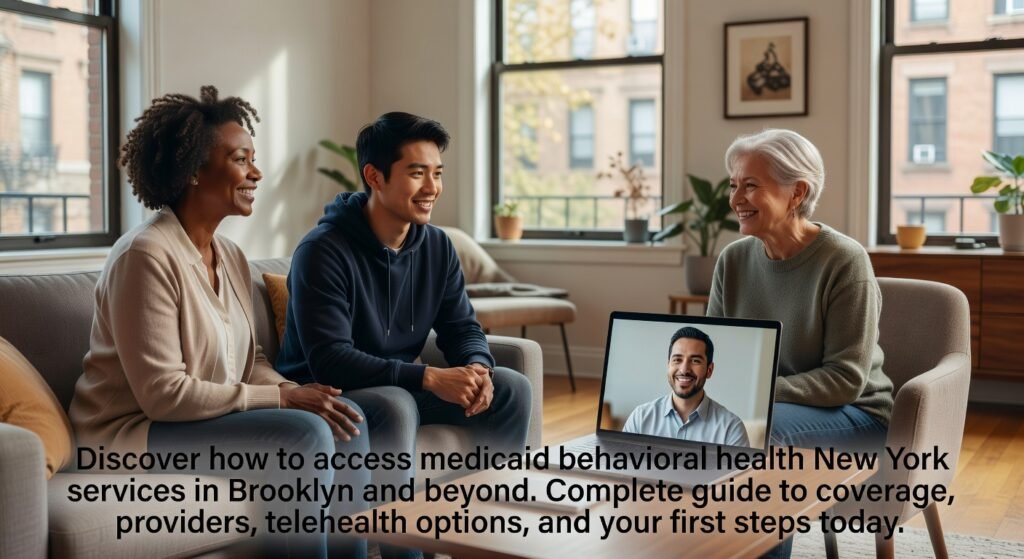
Is Medicaid Behavioral Health in Brooklyn Really Accessible? What You Need to Know in 2026
Did you know that approximately one in five adults in New York State experience mental illness each year, yet fewer than half receive treatment? For Brooklyn residents relying on Medicaid, the gap between need and access is even starker. Understanding medicaid behavioral health New York coverage has become essential as we navigate 2026’s changing landscape, and the good news is that pathways to care exist—you just need to know where to look.
As someone who has guided hundreds of New York Medicaid patients through the mental health system, I’ve seen firsthand how confusing and frustrating the process can be. One moment you’re desperate for help, the next you’re stuck in a maze of insurance codes, eligibility questions, and provider networks. But here’s what I’ve learned: with the right information and a strategic approach, Brooklyn residents can absolutely access quality behavioral health services through Medicaid. This guide will show you exactly how.
The Current State of Medicaid Behavioral Health in Brooklyn and Beyond
Let’s start with the reality on the ground in 2026. New York’s Medicaid program serves over 6 million people across the state, including significant populations in Brooklyn, Queens, Manhattan, the Bronx, and Staten Island. According to the Centers for Disease Control and Prevention (CDC), mental health conditions affect approximately 52.9 million American adults annually, with New York State tracking closer to 3.2 million residents experiencing diagnosable mental illness in any given year.
What makes Brooklyn unique is its diversity—both culturally and economically. Residents span from Williamsburg to Sunset Park, from Crown Heights to Bay Ridge, each neighborhood presenting distinct challenges in accessing online therapy medicaid New York services. Some patients have robust access to in-person providers; others find themselves in mental health deserts where the nearest therapist accepting Medicaid is 30 minutes away on the subway.
The good news? Telehealth mental health New York services have expanded dramatically. What was once a niche offering is now a cornerstone of behavioral health delivery, especially for Medicaid beneficiaries who face transportation barriers, scheduling conflicts, or disability-related accessibility challenges.
Understanding Your Medicaid Mental Health Coverage Options
Medicaid covers a comprehensive array of behavioral health services in New York. Your specific coverage depends on which Medicaid managed care plan you’re enrolled with—whether that’s Fidelis, United Healthcare, Molina, or another plan. Medicaid mental health coverage New York typically includes:
Outpatient therapy and counseling: Individual, family, and group therapy sessions with licensed therapists, psychologists, or clinical social workers. Most plans cover weekly sessions with minimal or no copayments for eligible members.
Psychiatric services: Medication management and psychiatric evaluation from licensed psychiatrists or advanced practice nurses. These appointments are essential if you’re considering medication as part of your treatment plan.
Crisis intervention: 24/7 access to crisis lines and emergency psychiatric services. If you’re in acute distress, Medicaid covers emergency room visits and crisis stabilization programs across Brooklyn and New York City.
Substance use disorder treatment: If behavioral health issues include addiction or substance use, Medicaid covers detoxification, rehabilitation programs, and medication-assisted treatment.
Telehealth therapy coverage New York has become a game-changer for many patients. Virtual sessions are fully covered under most Medicaid plans, making affordable therapy New York accessible even if you live far from providers or have limited mobility.
Meet Maria: A Real Brooklyn Story
Let me introduce you to Maria, a 34-year-old administrative assistant living in Sunset Park, Brooklyn. She’s been struggling with depression and anxiety for three years but kept putting off seeking help because she assumed therapy would be too expensive. She works 40 hours weekly for a small nonprofit that doesn’t offer health insurance, so she applied for Medicaid—her only realistic option.
When Maria finally called her Medicaid plan seeking mental health services medicaid New York, she was told she could see a therapist, but the first available in-person appointment was six weeks away at a clinic in Downtown Brooklyn. She didn’t have a car, and taking the subway during rush hour triggered her anxiety attacks. She almost gave up.
But then Maria discovered telehealth therapy coverage New York options. Within one week, she was video-calling with a licensed clinical social worker in her apartment. The sessions cost nothing out-of-pocket thanks to Medicaid. After two months of consistent therapy combined with medication management from a psychiatrist she met virtually, Maria reported feeling “like myself again.” She’s now working with her therapist on long-term strategies and has reduced her antidepressant dose under medical supervision.
Maria’s story isn’t unique. It’s repeated across Brooklyn, Queens, Harlem, Astoria, Flushing, and every corner of New York where Medicaid beneficiaries are finally accessing the care they deserve.
Your Step-by-Step Action Plan: Starting Behavioral Health Treatment Today
Step 1: Verify Your Medicaid Eligibility and Plan Details
First, confirm you’re actively enrolled in Medicaid and understand which managed care plan you’re with. You can verify this by calling 1-800-541-2831 (New York State Medicaid) or logging into your plan’s member portal. Have your Medicaid card handy—it shows your plan name and member ID.
Step 2: Understand Your Mental Health Benefits
Call your Medicaid plan’s behavioral health line. Every plan has a dedicated number for mental health inquiries. Ask specifically about: covered services, copayment amounts, network providers, and whether they offer online therapy medicaid New York options. This conversation typically takes 10 minutes and gives you a clear picture of what’s available.
Step 3: Choose Between In-Person and Virtual Care
For Brooklyn residents, virtual care often makes sense. Online counseling New York medicaid services eliminate travel time and can often be scheduled faster than in-person appointments. If you prefer in-person connection, your plan can provide a list of therapists accepting Medicaid in your neighborhood or nearby areas.
Step 4: Get a Referral or Referral Waiver
Some Medicaid plans require a referral from your primary care doctor. If you don’t have a PCP or want to bypass this step, ask your plan about “open access” or whether they have a referral waiver for behavioral health services. Many plans now allow direct access to mental health providers without a referral.
Step 5: Contact Providers Directly
Once you have a list of in-network providers, call and ask: “Do you accept Medicaid?” and “What’s your current wait time?” Be persistent. If the first three providers have long waitlists, keep calling. Brooklyn has thousands of Medicaid-accepting therapists.
Step 6: Attend Your First Appointment
Bring your Medicaid card, government-issued ID, and proof of residency if it’s a new provider. The first session is an intake appointment where the therapist assesses your needs, diagnoses, and develops a treatment plan. This appointment is crucial—it sets the foundation for your entire treatment.
Why Telehealth Changes Everything for New York Medicaid Patients
I’ve worked with countless patients in Astoria, Flushing, Harlem, and across New York who initially dismissed online therapy medicaid New York as inferior to in-person care. Every single one changed their mind after the first session. Here’s why telehealth works:
Accessibility: No transportation barriers. For elderly patients, disabled patients, or those with severe anxiety, attending in-person appointments can feel impossible. Virtual therapy eliminates this obstacle entirely.
Speed: Most telehealth providers can schedule appointments within days, not weeks. This matters tremendously when you’re in crisis.
Consistency: Weather, transit delays, and childcare emergencies are less likely to cause you to miss sessions when you’re attending from home.
Privacy: Some patients feel more comfortable discussing sensitive topics from their own space rather than in a clinical office.
Cost: Medicaid covers telehealth the same way it covers in-person care—often with zero copayments.
If you’re interested in learning more about how telehealth works within Medicaid, visit medicaidtherapyonline.com’s telehealth guide for detailed information about virtual therapy options.
Medicaid Therapy Benefits: What’s Really Covered
Medicaid therapy benefits New York are surprisingly comprehensive. Most plans cover:
Unlimited sessions: Unlike many private insurance plans that cap therapy at 30 sessions annually, Medicaid covers ongoing therapy deemed medically necessary. This means if your provider and you agree that weekly therapy is needed long-term, Medicaid covers it.
Medication management: Psychiatric appointments for medication evaluation and management are fully covered with zero copay in many cases.
Crisis services: 24/7 crisis hotlines, emergency psychiatric services, and inpatient hospitalization for severe mental health episodes are all covered.
Specialized treatment: If you need trauma-focused therapy, dialectical behavior therapy (DBT), cognitive-behavioral therapy (CBT), or other evidence-based approaches, Medicaid covers them when medically necessary.
Family services: Family therapy and psychoeducation sessions are covered, which is invaluable for individuals whose mental health impacts their loved ones.
Special Considerations for New York Medicaid Patients
New York State has implemented several programs to enhance behavioral health access. The Medicaid program covers virtual therapy New York insurance through various platforms, and the state has prioritized reducing wait times and expanding provider networks in underserved areas like parts of Brooklyn, Queens, and the Bronx.
Additionally, if you’re experiencing homelessness or housing instability, Medicaid behavioral health services remain available and are often enhanced through partnerships with social services agencies. Organizations like Home Care Medicaid NY help coordinate comprehensive care including mental health services for vulnerable populations.
For families with children and adolescents who may benefit from specialized behavioral services, or if you’re interested in exploring all available health services covered by Medicaid, resources like Autism ABA Services demonstrate the breadth of behavioral and developmental supports available through insurance programs.
Common Obstacles and How to Overcome Them
Long wait times: If your Medicaid plan has 4-6 week waits for in-person appointments, immediately pivot to telehealth options or try calling smaller practices that may have immediate openings.
Providers claiming they don’t accept Medicaid: This still happens despite being illegal. If a provider refuses Medicaid after you’ve confirmed they’re in-network with your plan, file a complaint with your Medicaid plan and the New York State Department of Health.
Being told you need a referral but can’t access your PCP: Push back. Many Medicaid plans now offer open access to behavioral health without referrals. Ask your plan specifically if they waive the referral requirement for mental health services.
Limited providers in your neighborhood: Expand your search geographically and seriously consider telehealth. If you live in a neighborhood with fewer Medicaid-accepting providers, virtual therapy likely offers more options.
FAQ: Your Medicaid Behavioral Health Questions Answered
Q1: Does Medicaid in New York cover therapy without a referral?
Answer: It depends on your specific Medicaid plan. Most managed care plans in New York now offer “open access” or referral-free pathways to behavioral health services, meaning you can call a therapist directly without getting permission from your primary care doctor first. However, some plans and some Primary Care Physicians still require referrals. The fastest way to find out is to call your Medicaid plan’s behavioral health department directly at the number on your card and ask: “Do I need a PCP referral to see a therapist, or can I access behavioral health services directly?” Document their answer for your records.
Q2: If I’m currently seeing a therapist who doesn’t accept Medicaid, can I switch providers without losing progress?
Answer: Yes, absolutely. Many patients worry that switching therapists will undo their progress. In reality, a good therapist expects this transition and will provide you with a thorough summary of your treatment to share with your new provider. When you start with a Medicaid-accepting therapist, bring this summary to your first appointment. A competent clinician will review your history and continue from where you left off. The transition typically takes 1-2 sessions to reestablish rapport, but your progress isn’t lost. Many patients actually benefit from a fresh perspective with a new provider who specializes in their specific needs.
Q3: How do I access emergency mental health services if I’m having a crisis and can’t wait for a therapy appointment?
Answer: If you’re experiencing a mental health crisis, Medicaid covers immediate emergency services. Call 988 (the Suicide and Crisis Lifeline) free from any phone, anytime, 24/7. This is available to everyone in the US including all Medicaid beneficiaries. You can also go directly to the emergency room of any hospital in Brooklyn or New York—Medicaid covers emergency psychiatric care. If you’re in immediate danger to yourself or others, call 911. Emergency psychiatric hospitalization, crisis stabilization services, and mobile crisis teams are all fully covered by Medicaid in New York State. There are no copayments for emergency mental health services.
Your Path Forward with Medicaid Behavioral Health in New York
Accessing medicaid behavioral health New York services is absolutely possible in 2026, whether you live in Brooklyn, Queens, Manhattan, the Bronx, Staten Island, or any of New York’s neighborhoods. The system isn’t perfect—wait times exist, provider shortages persist in some areas, and navigation can feel overwhelming. But the infrastructure is there. Quality therapists are waiting to help you. Medicaid will cover the cost.
The most important step is your first one: making that phone call to your Medicaid plan today. Every day you delay is another day without the support you deserve. If you’re unsure where to start or need personalized guidance about finding the right behavioral health provider for your specific situation, the team at medicaidtherapyonline.com specializes in helping New York residents navigate this exact process. We’ve helped hundreds of people in Brooklyn and across the city get connected with Medicaid-covered mental health care that actually works.
You deserve access to quality mental health care. Medicaid in New York makes that possible. Take action today.
Reviewed by the MedicaidTherapyOnline Editorial Team, in consultation with licensed New York mental health professionals.