

Therapy for Medicaid: 2026 Essential Guide for New York, NY Residents
The bill arrives. The waitlist stretches past three months. Your child is struggling right now and you’re sitting at a kitchen table in the Bronx or Queens or Staten Island, wondering how families who don’t have thousands of dollars are supposed to get help. That feeling of being caught between urgency and financial reality is one of the most exhausting places a parent can occupy, and we want to start by saying this plainly: therapy for Medicaid recipients is a real, funded, legally protected benefit in New York and you have every right to use it.
Key Clinical & Policy Sources
- According to SAMHSA’s 2022 National Survey, approximately 22.8% of U.S. adults experienced mental illness in the past year.
- SAMHSA data shows only 46.2% of U.S. adults with mental illness received treatment in 2022.
- The CDC reports depression affects more than 21 million American adults annually.
At MedicaidTherapyOnline.com, our New York clinical team works daily with families across all five boroughs and surrounding counties from Westchester to Suffolk who discovered too late that coverage was available and accessible all along. This guide is written specifically for parents and family caregivers who are making a decision right now, under pressure, and need honest, clear answers about cost, coverage, and what to actually expect.
Why Cost Is the First Conversation We Have with New York Families
We don’t wait until the end of the intake call to discuss money we lead with it, because not doing so wastes your time and ours. Here is the straightforward reality for 2026: New York State Medicaid covers outpatient mental health services including telehealth therapy sessions. That means if your child or family member is enrolled in Medicaid including Managed Care plans like MetroPlus, Healthfirst, Fidelis Care, or Molina Healthcare NY therapy sessions are covered. In most cases, your out-of-pocket cost is $0 or a nominal copay of $1–$3.
This matters enormously when you consider the scale of need. According to SAMHSA’s 2022 National Survey, approximately 22.8% of U.S. adults experienced mental illness in the past year and in dense urban environments like New York City, those numbers cluster higher due to economic stress, housing instability, and community trauma. Yet SAMHSA data shows only 46.2% of U.S. adults with mental illness received treatment in 2022, largely because of cost-related barriers. You are not failing your child by being uncertain about coverage. The system has historically been unclear on purpose. Our job is to make it clear.
🔑 Key Takeaway
Residents of New York, NY seeking therapy for Medicaid can access Medicaid-covered telehealth mental health services in 2026. Our clinical team is available to help navigate enrollment, provider selection, and ongoing care coordination.
A Real Family’s Experience: From Flushing, Queens to First Session in 72 Hours
Last spring, a mother we’ll call her Rosa contacted our practice from her apartment in Flushing, Queens. Her 14-year-old son had been showing signs of severe anxiety for over eight months. He had stopped attending school in-person and was refusing to leave the apartment. Rosa had called two private therapists in Forest Hills; both quoted her $175–$220 per session with no Medicaid acceptance. She assumed that meant therapy was simply out of reach.
When she reached our team, we confirmed within the same call that her son’s Medicaid Managed Care plan — Healthfirst was accepted, that telehealth sessions were fully covered, and that we could schedule a first appointment within 72 hours. The family paid nothing. Her son began weekly telehealth therapy, progressed through a structured anxiety treatment protocol, and returned to a hybrid school schedule within 11 weeks. Rosa’s exact words when we followed up: “I spent eight months thinking I couldn’t afford help that was free the whole time.”
This is not an exceptional story. It happens across Brooklyn, the Bronx, Harlem, and Long Island every week. And it is preventable with the right information.
What Medicaid Actually Covers for Therapy in 2026 New York
New York State expanded Medicaid telehealth coverage permanently following the COVID-19 pandemic, meaning the temporary flexibilities that allowed remote mental health visits are now codified into state policy. In 2026, covered services under New York Medicaid for mental and behavioral health typically include:
- Individual therapy (children and adults) — in-person and via telehealth
- Family therapy sessions — including sessions where the identified patient is a minor
- Diagnostic evaluations and mental health assessments
- Crisis counseling and stabilization services
- Behavioral health services for children under EPSDT (Early and Periodic Screening, Diagnostic and Treatment)
If your child has a co-occurring developmental or behavioral concern, you may also want to explore ABA Therapy New Jersey for families near the tri-state border, as ABA services have distinct coverage pathways. For cases where psychiatric medication evaluation is needed alongside therapy, our clinical partners at Legendary Online Psychiatry accept Medicaid and operate throughout New York.
Questions to Ask Your Provider Before Booking
Not every therapist who says they “work with Medicaid” is actually in-network with your specific plan. Before you commit to any provider, here are the questions our clinical administrators recommend asking — and the answers you should expect if the provider is legitimate:
- “Are you enrolled as a Medicaid provider with New York State — not just a private-pay therapist who occasionally bills Medicaid?” A proper answer includes their NPI number and specific plan participation.
- “Which Medicaid Managed Care plans do you accept — specifically MetroPlus, Healthfirst, Fidelis, or Molina?” If they pause or say “we’ll have to check,” that’s a red flag for billing delays later.
- “Will telehealth sessions be billed at the same covered rate as in-person sessions?” In 2026 under New York’s permanent telehealth expansion, the answer should be yes.
- “What is the copay, if any, for my child’s plan?” For most children covered under Child Health Plus or low-income Medicaid tiers, copays are $0 or under $3.
- “How long is your current waitlist for new Medicaid patients?” Legitimate telehealth practices with Medicaid infrastructure can often onboard within one to two weeks.
What to Expect: A Realistic Timeline from First Call to Ongoing Care
One of the things parents tell us they wish they’d known is that the timeline can be faster than they imagined especially with telehealth. Here is what the process typically looks like when working with a Medicaid-enrolled telehealth therapy practice in New York:
- Day 1–2: Intake call with a clinical administrator. Insurance eligibility is verified in real time using your Medicaid ID. You provide basic demographic information and describe your child’s primary concerns.
- Day 3–7: Diagnostic evaluation or intake assessment is scheduled. This is typically a 60-minute session with a licensed clinician who reviews developmental history, symptom onset, and current functioning.
- Week 2: A treatment plan is developed and shared with you. You have the right to ask questions, request changes, and understand the therapeutic approach being used.
- Weeks 3–12: Weekly or biweekly therapy sessions begin. For children with anxiety or depression, many evidence-based protocols (such as CBT) are designed for 12–16 weeks of structured work with measurable progress checkpoints.
- Month 3+: Progress is reviewed. Some children step down to monthly maintenance sessions; others continue weekly work. Medicaid does not impose an arbitrary session cap for medically necessary treatment.
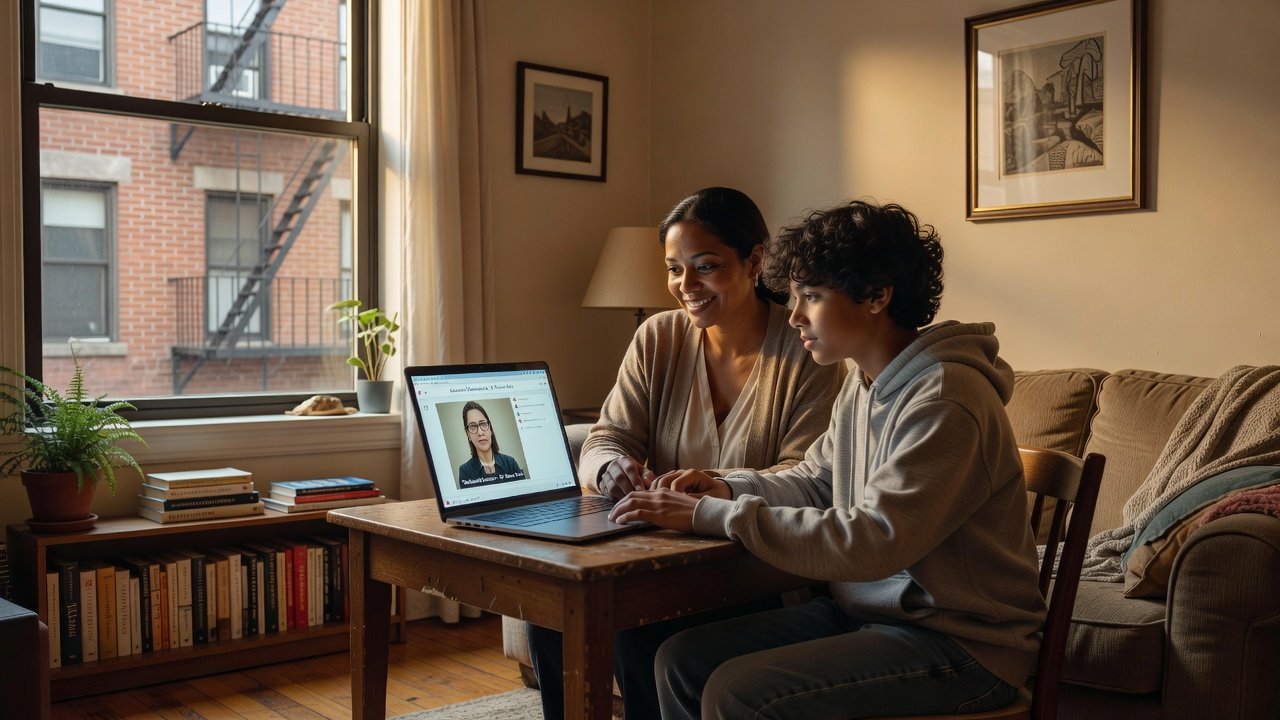
The entire sequence above from first call to ongoing care happens in your home, via a secure video platform, without a single subway ride or parking fee. For working parents in Staten Island, the South Bronx, or East New York, that logistical reality is not a minor convenience. It is the difference between accessing care and not accessing it.
Frequently Asked Questions: Therapy for Medicaid in New York
Can my child get therapy through Medicaid even if we’ve been denied other services in the past?
Yes, and this is a critically important distinction. A denial for one type of service (such as a specific specialist referral) does not affect your child’s eligibility for outpatient mental health therapy. Under EPSDT provisions embedded in New York Medicaid, children are entitled to any medically necessary service, including therapy, regardless of prior authorization outcomes in other service categories. If you have been told your child “Doesn’t qualify” for therapy, we strongly recommend requesting that denial in writing and contacting a Medicaid patient advocate at the New York State Department of Health.
What if my child needs therapy but I’m not sure they have a formal diagnosis?
A formal diagnosis is not required to begin therapy. In New York, a licensed clinician can conduct a diagnostic evaluation as part of the initial intake process, and Medicaid covers that evaluation as a billable service. Many children enter therapy with a presenting concern (anxiety symptoms, school refusal, behavioral changes after a traumatic event) and receive a working diagnosis through the clinical process itself. You do not need paperwork from a pediatrician or school to start.
Does New York Medicaid cover telehealth therapy in 2026, or do we have to go in person?
Telehealth therapy is fully covered under New York Medicaid in 2026. New York State expanded Medicaid telehealth coverage permanently following the COVID-19 pandemic, and this applies to behavioral and mental health services including individual therapy, family therapy, and diagnostic evaluations. Sessions are conducted via HIPAA-compliant video platforms. The only requirement is a device with a camera (a smartphone is sufficient) and a private space for the session.
You Are Not Alone and You Are Asking the Right Questions
The fact that you are reading this guide means you are already doing the hardest part: advocating for your child in a system that does not always make itself easy to navigate. The American Psychiatric Association reports that 75% of people with mental illness do not seek treatment and the most common reason is not unwillingness. It is the belief that help is unaffordable or inaccessible. For Medicaid families in New York, that belief is a barrier we are determined to dismantle.
Your child’s borough whether it’s Mott Haven, Midwood, Woodside, or Mariners Harbor does not determine their access to quality mental health care. Their Medicaid card does. And in 2026, that card is more powerful than most families realize.
Our New York clinical team is available for a free, no-pressure eligibility verification call. We will confirm your plan is accepted, explain exactly what is covered, and connect you with a licensed therapist who has experience with children and families in New York’s urban environment. Reach out today — because your child’s timeline matters, and so does yours.
Related: Telehealth Medicaid Therapy Services — learn how virtual sessions are covered under New York Medicaid.
Also on this site: Virtual Mental Health Services That Accept Medicaid in Ridgewood, Quee
Also on this site: Virtual Therapist That Take Medicaid