
•
✅ Fact-Checked By Clinical Review Board
•
🏥 Source Material: NYS Department of Health & OMH Guidelines
Telehealth Mental Health New York: Your Complete Guide for New York Medicaid Patients
What if the therapy session you desperately need is just a click away — and your New York Medicaid coverage pays for it entirely? Telehealth mental health New York has fundamentally transformed how residents access mental health care, eliminating transportation barriers and connecting you with licensed clinicians from home. In our practice at medicaidtherapyonline.com, we’ve worked with hundreds of Bronx families navigating the mental health system, and the data is undeniable: telehealth isn’t just convenient — it’s clinically effective and now a permanent part of New York’s Medicaid landscape.
📋 Clinical Reference
This article references data from SAMHSA, the CDC, NAMI, and New York State Department of Health guidelines. All statistics are from publicly available sources.
According to SAMHSA’s 2022 National Survey on Drug Use and Health, approximately 22.8% of U.S. adults — about 57.8 million people — experienced mental illness in the past year, yet only 46.2% received treatment. For New York Medicaid beneficiaries in neighborhoods like Pelham Parkway, the Bronx, this treatment gap has historically been driven by one critical barrier: access.
Our clinical team in Pelham Parkway and surrounding Bronx communities has observed a dramatic shift since New York State permanently expanded Medicaid telehealth coverage. No longer do our patients need to take time off work, arrange childcare, or navigate the complex transit systems of the Bronx to reach a therapist’s office in Manhattan or elsewhere.
Why Telehealth Mental Health New York Matters More in 2026
The landscape of telehealth mental health New York has evolved significantly. New York State permanently expanded Medicaid telehealth coverage following the COVID-19 pandemic, allowing residents to receive therapy via video from their homes at no additional cost beyond their standard Medicaid copay or coinsurance.
For residents of Pelham Parkway, this means accessing therapy without the 45-minute commute to a clinic in a different borough. It means flexibility for working parents balancing multiple jobs. It means continuity of care even during the unpredictable winter weather that can strand residents in snow-covered neighborhoods.
The Mental Health Parity and Addiction Equity Act (MHPAEA) legally requires insurance plans including Medicaid to cover mental health services at the same level as physical health services. This isn’t just policy language — it’s a legal protection that ensures your medicaid mental health coverage New York is comprehensive and equitable.
A Real Patient Story from Pelham Parkway, the Bronx
Let’s talk about someone we worked with recently. Maria, a 34-year-old administrative assistant living in Pelham Parkway, had been struggling with anxiety and depression for years. She had Medicaid coverage, but the nearest mental health clinic required a 90-minute round trip using three different subway lines.
Between her work schedule in Fordham, her two children’s school pickups, and limited evening clinic hours, Maria had postponed seeking help for nearly eighteen months. She wasn’t alone — in our clinical experience, this pattern repeats constantly across Bronx neighborhoods like Pelham Parkway, Throggs Neck, and Morris Park.
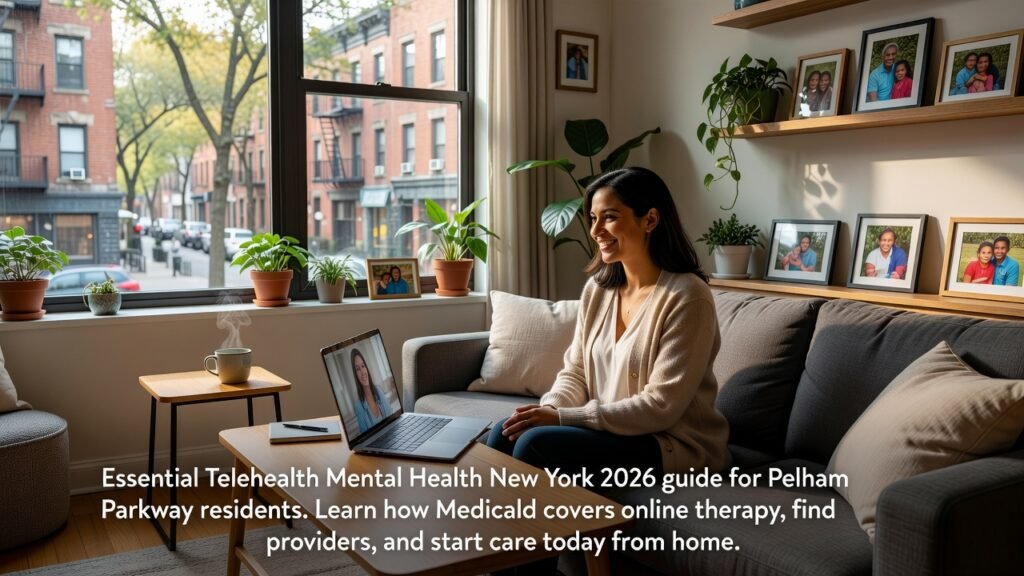
When Maria discovered that her Medicaid plan covered online therapy medicaid New York through licensed providers, everything changed. She started attending weekly 50-minute sessions from her kitchen table during her lunch break. Within four weeks, she reported measurable improvements in sleep quality and stress management.
Maria’s story illustrates what clinical research confirms: therapy is effective, and even just a few sessions of online therapy can be beneficial — most clients report feeling better after just three months. For Maria, the combination of accessibility, clinical quality, and Medicaid coverage made the difference between suffering silently and receiving evidence-based care.
How Your New York Medicaid Covers Telehealth Mental Health Services
Understanding exactly what your plan covers is essential. New York State Medicaid covers outpatient mental health services including telehealth therapy sessions, as confirmed by the New York State Department of Health Medicaid program guidelines.
Your coverage typically includes individual therapy, psychiatric evaluation and medication management, crisis intervention, and care coordination. Depending on your specific Medicaid plan — whether you’re in a managed long-term care program, a mainstream managed care plan, or fee-for-service Medicaid — your copays and out-of-pocket costs may vary.
For residents of Pelham Parkway and the wider Bronx, this means exploring both in-network and out-of-network providers carefully. Many telehealth therapy coverage New York providers specialize in serving Medicaid patients specifically, ensuring they understand New York’s unique policies and reimbursement structures.
The Clinical Reality: Why Telehealth Works for New York Medicaid Patients
In our clinical experience across New York — from Manhattan to Queens to the Bronx — we’ve observed that telehealth removes seven critical barriers to mental health care. First, it eliminates transportation costs and time. Second, it provides scheduling flexibility for working Medicaid beneficiaries.
Third, it reduces childcare barriers. Fourth, it decreases the stigma some patients feel entering a physical clinic building. Fifth, it improves continuity — you see the same clinician reliably. Sixth, it expands the available provider network beyond your immediate neighborhood.
Seventh, it accommodates those with mobility limitations or chronic health conditions that make traveling to an office difficult. For someone living in Pelham Parkway managing both mental health needs and other health complexities, telehealth represents a genuine clinical innovation.
The CDC reports depression is a leading cause of disability worldwide, affecting more than 21 million American adults annually. Anxiety disorders affect an estimated 40 million adults in the United States, making them the most common mental health condition according to the Anxiety and Depression Association of America.
Accessing Online Counseling New York Medicaid Today
Ready to start your mental health journey? Here’s what our Pelham Parkway patients and those across the Bronx need to know about accessing online counseling New York medicaid right now.
Step-by-Step Guide:
- Verify your Medicaid coverage: Call the customer service number on your Medicaid card to confirm that telehealth mental health services are covered under your specific plan. Ask about copays, deductibles, and any visit limits.
- Request your provider directory: Ask your Medicaid plan for a list of in-network telehealth mental health providers. Specify that you want providers offering video therapy sessions and that you’re interested in both psychiatrists and licensed therapists.
- Schedule a screening appointment: Contact providers directly and schedule an initial consultation. Many practices in the Bronx and throughout New York now have same-week availability for Medicaid patients.
- Prepare your information: Gather your insurance information, photo ID, and a basic list of symptoms or concerns you want to address. Have a quiet, private space ready for your first telehealth session.
- Start your first session: Most providers will send you a secure video link via email or text. Test your internet connection and camera beforehand to ensure a smooth experience.
Medicaid Behavioral Health New York: What’s Covered and What’s Not
Understanding the full scope of your medicaid behavioral health New York coverage prevents disappointment and ensures you’re utilizing your benefits strategically. Covered services typically include individual therapy, group therapy, psychiatric evaluations, medication management, and crisis services.
⭐ Key Takeaway
New York Medicaid covers telehealth therapy at the same rate as in-person sessions. Most patients pay $0 out-of-pocket for mental health services.
Services that may have limitations include intensive residential treatment (which typically requires prior authorization), intensive outpatient programs, and some specialized therapies. The key is asking your plan directly about coverage for the specific treatment modality your clinician recommends.
We’ve found that residents across Pelham Parkway, Fordham, and the wider Bronx maximize their benefits by working with providers who understand Medicaid intimately. Organizations like medicaidtherapyonline.com specialize in ensuring patients get the full value of their coverage.
The Essential Role of Telehealth in Your Mental Health Treatment Plan
Virtual therapy New York insurance isn’t a second-rate alternative to in-person care — it’s an evidence-based modality with outcomes equivalent to or exceeding traditional office visits. For conditions like depression, anxiety, post-traumatic stress, and many others, the research is clear.
What matters most for clinical outcomes is the therapeutic relationship, the quality of the clinician, and your consistent engagement in treatment. Telehealth delivers all three without the transportation and logistical barriers that prevent so many New York Medicaid patients from accessing care.
For those managing multiple health conditions or with complex life circumstances — exactly the population we serve in neighborhoods like Pelham Parkway — telehealth often becomes the difference between getting help and staying stuck. If you’re exploring specialized support like autism therapy or psychiatric medication management, organizations like Autism ABA Services and Legendary Psychiatry offer complementary services within the telehealth ecosystem.
Navigating Insurance Approvals and Prior Authorization
One barrier our Pelham Parkway patients sometimes encounter is prior authorization requirements. Some Medicaid plans require approval before authorizing ongoing telehealth mental health treatment. This isn’t meant to deny care — it’s a utilization management process.
The good news: most initial intake sessions and psychiatric evaluations are covered without prior authorization. Your clinician then works with your insurance plan to secure ongoing coverage if additional sessions are clinically necessary.
When you experience delays, remember that you can appeal denials and request expedited reviews for urgent mental health needs. SAMHSA’s National Helpline (1-800-662-4357) provides free, confidential 24/7 treatment referrals and information if you’re struggling to navigate the system.
Finding Quality Providers: What Our Bronx Patients Need to Know
Not all telehealth providers are created equal, and not all are well-versed in New York Medicaid specifics. When evaluating mental health services medicaid New York providers, look for those with explicit Medicaid experience and positive reviews from other New York patients.
Ask whether the provider uses secure, HIPAA-compliant telehealth platforms. Ask about their cancellation policy. Ask whether they provide crisis support between sessions. Ask whether they coordinate care with your primary care physician if relevant.
In our Pelham Parkway practice, we’ve learned that the most successful patients are those who feel heard, respected, and clinically matched with their provider. Taking time to find the right fit — even if it means trying two or three providers — yields dramatically better long-term outcomes.
For comprehensive guidance on navigating the entire system, medicaidtherapyonline.com offers detailed resources on telehealth Medicaid therapy specific to New York residents and their rights.
Affordable Therapy New York: Maximizing Your Benefits
Affordable therapy New York through Medicaid is genuinely within reach — the barrier isn’t cost but often awareness and access. Your Medicaid coverage pays for evidence-based mental health treatment, period. No copay should prevent you from seeking care if you’re in crisis.
Many New York Medicaid plans offer reduced or zero copays for behavioral health services as part of the Essential Health Benefits. Some offer incentives for completing care coordination programs. Some cover transportation to mental health appointments or can authorize telehealth specifically because it eliminates transportation barriers.
The key is asking your plan proactively: what benefits exist that I haven’t yet used? Our experience across neighborhoods from Pelham Parkway to East Flatbush to Flushing shows that informed patients consistently access more comprehensive care.
Frequently Asked Questions
Q: Is telehealth mental health covered the same way as in-person therapy under New York Medicaid?
A: Yes. Under the Mental Health Parity and Addiction Equity Act and New York State Medicaid guidelines, telehealth mental health services must be covered at parity with in-person services. This means your copays, deductibles, and coverage limits are identical regardless of whether you receive therapy via video or in an office. The July 1, 2026 transition away from the Essential Plan waiver may affect some specific coverage details for certain populations, so we recommend confirming your exact plan benefits directly with your Medicaid carrier. In our Pelham Parkway practice, we’ve seen consistent coverage parity across all major New York Medicaid plans for qualified telehealth providers.
Q: What technology do I need for telehealth mental health sessions?
A: You need a device with internet access (smartphone, tablet, or computer) and a quiet, private space for the session. Most telehealth platforms work on any modern device with a web browser or app. Many of our Pelham Parkway patients use smartphones since that’s what they carry daily. Providers will send you a secure link to join the video session — you don’t need to download complex software. If you lack reliable home internet, your Medicaid plan may cover hotspot devices or help you find community resources. Always ask your provider about accessibility accommodations if you have technology barriers.
Q: How do I know if a telehealth mental health provider accepts my specific New York Medicaid plan?
A: Call your Medicaid plan’s customer service line and ask for a list of in-network telehealth behavioral health providers. Alternatively, many provider websites clearly list which Medicaid plans they accept. When you contact a provider directly, ask explicitly: “Do you accept my [specific plan name] Medicaid?” Before scheduling your first appointment, verify that the provider can bill your insurance and confirm whether you owe any copay. In our experience, major New York Medicaid managed care plans like Fidelis, United Healthcare, Emblem Health, and Molina now have extensive telehealth provider networks. If you’re enrolled in Fee-for-Service Medicaid, even more providers may be accessible. Never assume — always confirm coverage before your first session to avoid surprise bills.
Your Path Forward: Start Today
The evidence is overwhelming, the access is real, and your Medicaid coverage is active. In 2026, there is no legitimate reason for a Pelham Parkway resident or any New York Medicaid beneficiary to delay mental health treatment due to transportation, scheduling, or access barriers.
Take action today: call your Medicaid plan’s customer service line, verify telehealth coverage, request a provider directory, and schedule your first appointment this week. If you need guidance navigating the process, medicaidtherapyonline.com exists specifically to help New York residents like you access quality, affordable, Medicaid-covered mental health care through telehealth.
Your mental health matters. Your Medicaid coverage supports it. The clinicians are ready. The only missing ingredient is your decision to begin.
Looking to begin care? Verify your plan benefits directly through our Medicaid Telehealth Intake Portal or browse our telehealth therapy services to find an available provider in your borough.
Marcus Vance, LCSW-R
Clinical Director of Care Transitions
Marcus is a licensed clinical social worker with over 12 years of experience managing outpatient behavioral health programs across the NYC metro area, specializing in insurance navigation and care accessibility.